skip to main | skip to sidebar

The Scuttlebutt

I'm really not that cynical.

Pages

  • Home

Mar 23, 2011

Kanye: Contradicting Misogynist or Misunderstood Esotericism?


Hip-hop and rap music have an interesting position in American society. On one side, it’s seen as a terrorizing menace that perpetuates criminal and sexist ideals, and to others it represents a non-conformist voice reflecting urban communities and their right to be heard. I’m getting my feet wet on this particular genre of music and while I’m still just getting acquainted, it hasn’t taken me long to realize there are powerful messages behind the surface that deviates from what most perceive.

Kanye West is a prominent figure in the realm of hip-hop. Controversial, sure, but regardless whether you agree with his methods or not, this guy is artistically brilliant and very socially aware. Without critically analyzing his actions and lyrics, Kanye seems strikingly prideful and pompous with little regard to others. But knowing that nothing is actually as it seems, I caught interest in this bombastic icon. Kanye’s music embraces obscurity and isn’t easily grasped in the light of day. He uses fantasy, satire, and hyperbole to stream together an autobiography or point of view, with little concern to literal translation. This underlines the consideration that rap/hip-hop is, by definition, poetry.

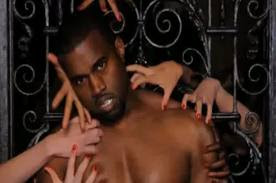
His new video for the song Monster roused a backlash of anger over the obvious use of female exploitation. The apparent displays of violence and brutal sexual treatment toward women caused enough controversy for MTV to ban the video after receiving a slew of petitions. My reaction wasn’t different. I felt puzzled and irritated that someone with a history of powerful metaphors and context would completely degrade his credibility as one who fights injustices of the system. I was curious how someone can fight for the rights of one minority group while slandering another, in tandem, and determined to find a deeper, less offensive meaning.

Let’s think about Kanye’s past involvement with women. The infamous dramatics of interrupting Taylor Swift to defend Beyonce left everyone outraged and left me scratching my head. The whole incident wasn’t that big of a deal… and did anybody consider the fact he was absolutely RIGHT? His context was making a solid point- that black women aren't recognized for their talent as much as white women, even when it's basically unquestionable who's more deserving. Aftermath media stories of a broken up Swift left shaking on stage because of another angry black male were obnoxious. Poor Taylor? Please. I’m sure she’ll figure a way to eventually fight through the mental anguish. Keeping consistent with Kanye’s relation with women, I’m starting to think this video is just exposing the injustices of white women vs. minority women.

I found some insight on the blogosphere that noticed a story being told here. In the video, all of the completely dead women are white, while women of color were in a zombie, otherwise “monster,” state. I see here that Kanye is playing up the role (monster) given to him by America and further suggesting this role doesn’t just yield to the individual, rather a label all people of color have been and are continually stricken with. He’s virtually personifying the role people not only wanted to see, but forced him to embody. Nicki Minaj’s guest appearance is clearly categorizing the roles women have to pick from: Controlling bitch or innocent plaything. There’s an important undertone in the video, like I suspected, but I’m still not sure if I agree with it.

As someone who’s passionate about fighting against injustices and for civil liberties/human rights, I proudly stand in defense of every voice, idea, person that struggles to survive America. Kanye as a self-proclaimed mama’s boy shouldn’t ignore the objectification, backbreaking pressure, standards and boundaries all women are subjected to. Fighting against one "ism" should be fighting against all "isms." He’s become apart of the imperfections he stands against. Remaining secure in one perspective of a group without considering another lens is making the same mistake as the ignorant majority. And by grouping people into a framed judgment is muffling the efforts of progressive rebels fighting alongside. With all this said, there's no doubt that being oppressed in one area doesn't mean you're not privileged in another- and I'm aware my counterpoint is relatively weak, but it's important to consider. Ultimately, my respect Kanye as an artist and an intellect is unwavering, but he’s still evolving and he is holding to ideas that should be provoked. Just probably not ones that the majority disputes- always ignore the majority.

on 3/23/2011 2 comments Email This BlogThis! Share to X Share to Facebook
Labels: black media, ignorance, image, kanye west, objectification, race gender and media, rap/hip-hop, sexism
Bookmark this post:
StumpleUpon DiggIt! Del.icio.us Blinklist Yahoo Furl Technorati Simpy Spurl Reddit Google Twitter FaceBook

Mar 6, 2011

Soldiers Without Swords


The Black Press: Soldiers Without Swords is a documentary about the virtual invisibility of African American media and their struggle to get their voices heard. When slavery was abolished, blacks in American had to viciously fight to maintain in society. Life was arguably more grueling as a freedman, especially in the South; there were no means to employment, no wealth distribution, nobody teaching them how to survive, and blitzkriegs for frivolous lawbreaking to remove them from society (the law was essentially a tool for exclusion and expulsion). It was kind of like legally permitting 10-year-olds to drive, discontinuing driver’s education, and then arresting them for turning right on red. With such strong oppression, the black population fought a tough battle to keep their culture alive.

The sheer wonder that media possesses is beyond underrated, but The Black Press is really mind opening. Using a newspaper as a tool to transport ideas, dignity, hope, inspiration is beyond extraordinary and marvelous. It told people how to get jobs, how to get housing, how to manage in the jungle, that no one should stand for the heinous treatment from white people. There was a chance to comeback to the obscenely offensive cartoons and articles in the white papers and a chance to leave a legacy worthy of their respect.

The revolutionized means of communication gave a voice to the profound intellect that was formerly oppressed in the black community. Knowledge otherwise ignored of black history (like how the entire genealogy of the human race has black origins) was surfaced; new scholars now had a medium to talk and teach. The diversity of opinion was a substantial advancement for the growth of not only blacks, but also America as a whole. Without the new range of opinions, Americans were smothered with only one (delusional and senseless) vantage point.

One of the surprising things of The Black Press was the origin of the “Double V” movement. I had recognized it as a Dick Nixon trademark, but had no idea it started in the black media during World War II. As WWII surfaced, America scrambled to recruit as many soldiers as possible, and they didn’t see a chance of winning without the involvement of African-Americans. Under this sudden desperation for compliance, the Double V campaign emerged and exposed the extreme injustice being called for. The Double V’s represented the fight for domestic victory at home, not just overseas- calling for a victory against racism. Why should one risk their life for a country that doesn’t acknowledge their human rights and maintains a conviction of hypocrisy? Why would one fight to better a country that has no intention on bettering their living conditions? This movement encompassed every valid reason for blacks to fight for citizenship at home if they were expected to give their lives for America’s victory.

Even with every valid reason, every logical rebuttal, white America will refute motives that appear undermining. The black media had to proceed with caution, otherwise risk claims of sedition, or behavior deemed with the intent to overthrow established order. The lines of sedition are blurry, akin to the Espionage Act, but the purpose was to outlaw statements during war that were "disloyal, profane, scurrilous, or abusive … about the form of government of the United States." Being cautious wasn’t enough for the black media, as their papers got banned from military circulation because the army felt it was dangerous.

The story behind the black press of America is one of heroism and inspiration. In conditions that were dominated by whites and egregious prejudice, the black press persevered with exceeding courage, honor, valor and distinction, fighting a battle that diligently persists today. We can acknowledge this history and regard it as admirable, but to continue as though it doesn’t apply to today is neglecting the bigger principle, and therefore rendering it useless.

on 3/06/2011 0 comments Email This BlogThis! Share to X Share to Facebook
Labels: black media, journalism, media, media inequality, race gap, race gender and media
Bookmark this post:
StumpleUpon DiggIt! Del.icio.us Blinklist Yahoo Furl Technorati Simpy Spurl Reddit Google Twitter FaceBook

Mar 5, 2011

Lara Logan and Media Sexism


A few weeks ago, there was an explosive conversation (debate) in my Race, Gender and the Media class. It started with somebody mentioning Lara Logan, the CBS news correspondent who was sexually assaulted while covering the Egyptian protests. Logan, accord­ing to an offi­cial CBS announce­ment, was attacked by a group of about 200 Egyp­tians and “suf­fered a bru­tal and sus­tained sex­ual assault and beat­ing before being saved by a group of women and an esti­mated 20 Egypt­ian sol­diers.” Unfortunately, the reaction to Logan’s tragedy was not of sympathy or respect, rather an intense media debate about women’s place in danger zones. Instead of criticism being focused on the mob who attacked Logan, it was placed directly on Logan herself. This woman was actually assaulted, then blamed for it because she’s attractive, has blonde hair and should have known what she was getting herself into.

Of course, this is disgusting. I have trouble glorifying these comments by acknowledging them. Funny enough, someone in class had the audacity to agree. Basically, this person asked how anyone can really be surprised? Elaborating that this is pretty much expected when you put an attractive female in a barbaric place like Egypt. My (correct) professor went off. Rightfully so! Here’s the problem with this: This woman gets the one of the biggest career opportunities to cover this protest, she’s fiercely competing with men to get this chance, she’s already mustering more courage than most people could think of, and then suddenly she’s supposed to say, “Oh, wait, ya know guys, I’m a woman, this is probably not such a good idea, I mean, I might get raped or something right? Please give me more protection.” Why would she think this? Her job is implicitly dangerous. Suggesting that women need more protection is condemning women as a burden, more expensive to employ and more demanding to protect. Anything could happen at any time, to any human. The fact women are more likely to get raped doesn’t discount that we’re less likely to be a target of murder. There’s possible danger for everybody; saying women need extra protection is vocalizing a difference between men and women and, by definition, is sexist.

The second half to this problem is the assumption, or stereotype, of Egypt as an uncivilized, barbaric country, expected to behave like this. Life in Cairo is actually very progressive and Westernized. Women appear unveiled and have rights and are not, in fact, public raping tools. The combination of this erroneous stereotype and sexism as justification for Lara Logan’s sexual assault is severely flawed.

There is no consolation for a woman that was forced to endure such brutal attacks, but there is seriously no right to blame the victim. The people in my class weren’t malicious for thinking such things, but even the most unconscious sexism is socially toxic.

on 3/05/2011 3 comments Email This BlogThis! Share to X Share to Facebook
Labels: education, egypt, ignorance, jour4470, journalism ethics, lara logan, media ethics, objectification, race gender and media, sexism, stereotypes
Bookmark this post:
StumpleUpon DiggIt! Del.icio.us Blinklist Yahoo Furl Technorati Simpy Spurl Reddit Google Twitter FaceBook

Feb 20, 2011

Please Stereotype Me!


A young female with loud red hair walks sheepishly past you. Eyes to the ground; seemingly lost in thoughts. Black fitted jeans and a black top ornately sprinkled with studs everywhere. One could (and will) assume many things: she’s anti-government, she’s tough, and she resists authority and challenges most rules. She probably likes metal and pretends to know about literature. Across the way is a female with long blonde hair, in a Juicy jumpsuit, oversized sunglasses and tanned skin in February. Assumptions: she likes male attention, bugs gross her out and reading, she claims the ability to run in spike heels, and likes vodka. These assumptions, or stereotypes, aren’t accidental. These attributes are probably very accurate traits or traits they admire. One could argue our personal freewill advocates that people dress a certain way because they want to; or could it be that our will isn’t as free as we thought and we’re actually adhering our identity to existing traits we find otherwise?


I’m starting to realize that as much as we’d like to criticize stereotyping, it’s really us that are actively endorsing and inviting stereotyping upon ourselves. We’re all very aware of the stereotypes out there; we joke about them, shake our heads at them, and totally embrace them! Whether it’s subconscious or completely intentional, we know the image we’re giving when we wear and do certain things. I happened to stumble upon this site that fully explains what we’re saying with the most tedious detail: Men with short hair are more credible, women with long hair are rebellious and less intelligent, clothing says everything about your education and personality, and the colors you choose will expose your true inner feelings.


While it’s unlikely all these judgments enter our minds (or are even accurate) based off appearance alone, there is definitely evidence that people get different treatment with different outfits. People are attracted to others that remind them of themselves. Clothes that you relate to transcend other ideals that are mutually shared. It’s only unhealthy when we have to make judgments of those we’re not familiar with. Different cultures and minority groups have standards that boring, white people wouldn’t understand. The trick is to fight the fear of the unknown, embrace it rather than dismiss it. People just think they’re sooo smart when they declare “baggy pants started in prison, so that guy must be a thug or inviting sex.” If you repeat that, you’ll notice it starts to sound dumber each time.


So do we dress and act for us or them? I think both. I know there’s a possibility I won’t have enough time to reveal my quirky, scandalous, fun self to everyone I encounter, so I rely on my clothes, music, and walk to do the talking when time is less available. [This act actually has a name, called self-fulfilling stereotypes] I even find that catchphrases and pieces of conversation can fall into predictable stereotype categories. One's college major also speaks measures about them and people love to fulfill the role that goes with their choice of study (one time this guy said he wouldn't be talking to me if I was a business major- because they're boring, duh). It probably wouldn’t take long for me to tell you your preferences in music, movies, bars, or tell you how you would react in a certain scenario. Obviously this sounds arrogant, but I’m sure I’d be more hot than cold because of my genuine passion for people watching. And surprisingly, people will find themselves proclaiming interests that belong more to the stereotype they identify with than themselves. So does our self-image come from within, independent of other influences or bias? Or do we form our identity to characteristics that already exist in others?

on 2/20/2011 2 comments Email This BlogThis! Share to X Share to Facebook
Labels: framing, gender roles, image, personal, race gender and media, stereotypes
Bookmark this post:
StumpleUpon DiggIt! Del.icio.us Blinklist Yahoo Furl Technorati Simpy Spurl Reddit Google Twitter FaceBook

Feb 15, 2011

Agenda Setting is Framing Our World


If I see a blonde on Rodeo Drive, I will figure we have nothing in common... and not because I hate shopping. On the other hand, I anticipate open and like-minded people at the independent bookstore. If a man of interest never makes eye contact with me, then the feelings probably aren’t reciprocated. Besides the subjects taught in school, what our parents showed us, and ideals we gather from our friends or peers, where else do we gather social or general knowledge? The formal lessons from school, parents and friends are so miniscule in comparison to everything else we know, we think, the way we manage our day-to-day and how we think about the future. This outside knowledge is the basis of choosing and interpreting body language, our choice of tone and words, our choice of action and so on. The unthinkable amounts of lessons learned outside of the classroom are not only exercised daily, but sweepingly accepted- and nobody really stops to ask, “Why do I think like this?”

Those who know me would likely predict I’m going to tell you the media is responsible, but the truth is that I don’t have an answer. Media is certainly my leading theory, but I can’t pretend to know the answer to a question so deep. All I can offer is support to my theory and hopefully encourage some critical thinking.

Movies, books, news, TV, radio take responsibility for teaching us things that don’t fit in the grid of school or parents. I’ve found that every ordinary reaction I have or mediocre choice I make is drawn from expectations and assumptions. If I text a friend, I expect a response, if I don’t get this expected response, I assume something is off (given the assumption they’re not busy). I expect that if I walk down Rodeo Drive I will deal with pretentious blondes that are uninterested in things beyond their designer bag. Obviously no scenario of life is guaranteed, no matter how predictable or recurrent past experience is, so why would I expect such things? Media teaches us and our role models (considering that behavior observed through others is most likely behavior derived from media), how to expect the world is or should be. If we took media away as an option for social learning, what would we be like? Would our instinct stay in accordance with how we currently behave or how we currently interpret others? Would I still have this resentment toward blondes shopping on Rodeo, or eagerness to make time for bookstore conversation?

Agenda setting is how news and media determine what stories are newsworthy. As a journalism student, I’ve had personal experience with changing, editing and framing stories to fit into a more relatable perception or different angle. These agendas are basically someone’s experience in life that has now been translated into an across-the-board norm.

It’s a house of cards that’s a force to be reckoned with. Crediting all of our basic knowledge of cause and effect to sources with possible conjecture, probable opinions, and definite misrepresentation isn’t comforting, but it’s all we have. It’s impossible to try and challenge every frivolous thought that lifetimes have worked to establish. Instead, the importance of doubt and critical thinking grows exponentially; we must sift through what matters and question the norm, the accepted and the forsaken.

on 2/15/2011 0 comments Email This BlogThis! Share to X Share to Facebook
Labels: agenda setting, education, framing, image, journalism ethics, knowledge, race gender and media
Bookmark this post:
StumpleUpon DiggIt! Del.icio.us Blinklist Yahoo Furl Technorati Simpy Spurl Reddit Google Twitter FaceBook

Feb 2, 2011

Visibility Does Not Translate Into Equality


Hide your wife, hide your kids… cause there are black people rapin’ everyone out there, while selling your kids crack. According to most media outlets, especially local news, white people are victims to violent crimes, drug dealers and backdoor “reparations” for slavery of black people. Loving mothers will desperately warn their grown children to be careful before wandering into the labyrinth of terror, otherwise called Dallas, alone. It’s no obstacle to find danger lurking in the corners of inner cities in news, but how many know about the CIA-crack-connection in the 80’s? Is it possible that this disproportion coverage represents reality and minorities have this embedded anger that white people are innocent of? Are non-whites simply more prone to crime? Rational thinking, personal experience with the angriest white people, the fact neither you nor I have probably never met someone that’s been attacked by a black person lead me to believe no.

News stations have standards for what makes a crime story “newsworthy.” Feature crimes are usually audacious, vicious, or unusual in some way. If the crime is an immediate threat, then it is considered newsworthy. Other than that ambiguity, newsworthy standards fluctuate between stations and intuitions of reporters. But this “intuition” I speak of invites slanting biases opposing minorities, for the most part. Our mainstream news is more compromised than ever. Floods of stories that seem objectively newsworthy are ignored all the time, for reasons that are open to speculation. The ratio of black criminal coverage to white criminal coverage is 3:1, even though statistics say they commit about ¼ of national crime and only represent 13% of the population (back to rational thinking). And when white criminals are shown, their race is used as an ironic juxtaposition to emphasize how surprising it is that educated white people misbehave. Like in this case, where a suspect involved with child pornography is "not under criminal investigation and police are just concerned for his welfare." This disproportion leads to severe public opinion perversion, whether they’re maximizing people’s failures or ignoring their existence. Mass media is the largest player in public opinion and racial progress because of the amount of people they reach and subtly persuade.

Well-meaning people might question the motive behind racial typecasting and argue that news only broadcasts what is happening. Unfortunately, the news is highly perpetuated by lobby groups and corporations with economic affiliations that have redefined conflict of interest. Politics have their own agenda to set and use the news to reach their audience. White people with power have an unspoken fear of losing what privilege comes with being white; and make no mistake; there is definitely still a gap between white and non-white privileges. Stated bluntly- while we abolished a formal apartheid system, there still remains a white-supremacist dynamic. Race is a tried-and-true tool to wedge a divide between people that would otherwise unite and challenge elites. “Political language," wrote George Orwell in 1946, "is designed to make lies sound truthful and murder respectable, and to give an appearance of solidity to pure wind."

These points may seem cynical to sweet idealists that have been target to covert manipulation, but these tactics are hardly original. A little research will dig up plenty of examples in history where media is used flagrantly to oppress non-whites. By no means does this come from some arrogant high ground, rather another person stuck in the same dynamic fighting to get out.

on 2/02/2011 1 comments Email This BlogThis! Share to X Share to Facebook
Labels: communism, conspiracy, crime coverage, journalism, media inequality, media racism, newsworthy, race gap, race gender and media, stereotypes
Bookmark this post:
StumpleUpon DiggIt! Del.icio.us Blinklist Yahoo Furl Technorati Simpy Spurl Reddit Google Twitter FaceBook

Jan 31, 2011

Are Ethics Necessary in Media?


Media’s influence on society is immeasurable. While there are legions of studies, theories and plenty of evidence showing that there is certainly a relationship, it’s impossible to precisely gauge the leverage media has on society, behavior, individual thought process, world communication, opinions and so forth. Personally, I think the impact is even more significant than we think. We get our facts and opinions from several agents in our life such as primary groups (parents), secondary groups (friends, teachers), opinion leaders (preachers, intellectuals) and media. The fact our minds are so vulnerable and accessible to these communication channels is a profound thought.

News can manipulate and be manipulated. To avoid this, most businesses and media adhere to stringent ethical guidelines. Where laws can’t protect from the public from malevolent or negligence, ethics are implied to. Unfortunately, humans’ altruistic intentions aren’t the most reliable for such a power and written guidelines are in place for things you can’t necessarily outlaw.

A new documentary called Hot Coffee was shown at Sundance about how corporations can spend money to influence the media and the significantly persuade the public in another direction. The story of Stella Liebeck and the infamous burns from McDonald’s coffee was incredibly distorted and made Stella a national mockery instead of exposing what really happened and the drastic negligence from McDonald’s.

Committing to business and humanitarian ethics is the socially responsible thing to do; and it’s smart business. When companies and people are trustworthy, they’re listened to. It’s just becomes the chicken and the egg when one decides what to do after they’re listened to-- a successful cycle for good behavior, and usually damaging to the unethical.

on 1/31/2011 0 comments Email This BlogThis! Share to X Share to Facebook
Labels: ethics, journalism, media ethics, persuasion, PR, untj4470
Bookmark this post:
StumpleUpon DiggIt! Del.icio.us Blinklist Yahoo Furl Technorati Simpy Spurl Reddit Google Twitter FaceBook

Newer Posts Older Posts Home

Labels

advertising (4) agenda setting (2) america (1) black media (2) C. Wright Mills (1) capitalism (1) carnival cruise (1) celebrity (1) cognitive bias (1) communism (1) conspiracy (1) consumerism (1) crime coverage (1) crisis PR (3) descartes (1) education (4) egypt (1) electronic (1) ethics (1) feuds (1) framing (3) future (2) gender roles (3) homosexuality in media (1) ignorance (4) image (6) jour4470 (2) journalism (5) journalism ethics (3) kanye west (1) knowledge (3) lara logan (1) marxism (1) masculinity (1) media (2) media bias (1) media ethics (2) media inequality (2) media racism (1) music (1) newsworthy (2) objectification (4) personal (2) persuasion (3) politics (4) PR (13) propaganda (2) race gap (2) race gender and media (9) racism (1) rap/hip-hop (1) reality TV (1) relationships (1) saul williams (1) sensationalism (1) sexism (2) social media (1) sports (1) stereotypes (3) stupid people in the headlines (1) teachers (2) technology (2) untj4470 (1)

Blog Archive

  • Mar (1)
  • Feb (2)
  • Jul (1)
  • May (3)
  • Apr (1)
  • Mar (3)
  • Feb (3)
  • Jan (2)
  • Dec (2)
  • Nov (3)
  • Oct (3)
  • Sep (2)

Followers

Powered by Blogger.

-Brittany Stone-

My photo
Brittany Stone
Recent graduate from the Mayborn School of Journalism of the University of North Texas. New to the Big Apple, getting my feet wet in the world of music PR, makin' change bartending. I'm an old soul that finds myself ruminating and brooding over life questions and revelations, --so this is my attempt to satisfy that, while chatting about PR, music, the evolving world of media/journalism and the unfortunate racism/sexism that still persists... ah! and politics aren't off the table. Don't worry, I play nice. L'chaim!
View my complete profile

Disqus for The Scuttlebutt

 
Copyright (c) 2010 The Scuttlebutt. Designed for Video Games
Download Christmas photos, Public Liability Insurance, Premium Themes