Mar 23, 2011
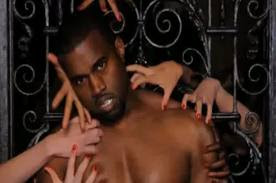
Kanye: Contradicting Misogynist or Misunderstood Esotericism?
Feb 20, 2011
Please Stereotype Me!

A young female with loud red hair walks sheepishly past you. Eyes to the ground; seemingly lost in thoughts. Black fitted jeans and a black top ornately sprinkled with studs everywhere. One could (and will) assume many things: she’s anti-government, she’s tough, and she resists authority and challenges most rules. She probably likes metal and pretends to know about literature. Across the way is a female with long blonde hair, in a Juicy jumpsuit, oversized sunglasses and tanned skin in February. Assumptions: she likes male attention, bugs gross her out and reading, she claims the ability to run in spike heels, and likes vodka. These assumptions, or stereotypes, aren’t accidental. These attributes are probably very accurate traits or traits they admire. One could argue our personal freewill advocates that people dress a certain way because they want to; or could it be that our will isn’t as free as we thought and we’re actually adhering our identity to existing traits we find otherwise?
I’m starting to realize that as much as we’d like to criticize stereotyping, it’s really us that are actively endorsing and inviting stereotyping upon ourselves. We’re all very aware of the stereotypes out there; we joke about them, shake our heads at them, and totally embrace them! Whether it’s subconscious or completely intentional, we know the image we’re giving when we wear and do certain things. I happened to stumble upon this site that fully explains what we’re saying with the most tedious detail: Men with short hair are more credible, women with long hair are rebellious and less intelligent, clothing says everything about your education and personality, and the colors you choose will expose your true inner feelings.
While it’s unlikely all these judgments enter our minds (or are even accurate) based off appearance alone, there is definitely evidence that people get different treatment with different outfits. People are attracted to others that remind them of themselves. Clothes that you relate to transcend other ideals that are mutually shared. It’s only unhealthy when we have to make judgments of those we’re not familiar with. Different cultures and minority groups have standards that boring, white people wouldn’t understand. The trick is to fight the fear of the unknown, embrace it rather than dismiss it. People just think they’re sooo smart when they declare “baggy pants started in prison, so that guy must be a thug or inviting sex.” If you repeat that, you’ll notice it starts to sound dumber each time.
So do we dress and act for us or them? I think both. I know there’s a possibility I won’t have enough time to reveal my quirky, scandalous, fun self to everyone I encounter, so I rely on my clothes, music, and walk to do the talking when time is less available. [This act actually has a name, called self-fulfilling stereotypes] I even find that catchphrases and pieces of conversation can fall into predictable stereotype categories. One's college major also speaks measures about them and people love to fulfill the role that goes with their choice of study (one time this guy said he wouldn't be talking to me if I was a business major- because they're boring, duh). It probably wouldn’t take long for me to tell you your preferences in music, movies, bars, or tell you how you would react in a certain scenario. Obviously this sounds arrogant, but I’m sure I’d be more hot than cold because of my genuine passion for people watching. And surprisingly, people will find themselves proclaiming interests that belong more to the stereotype they identify with than themselves. So does our self-image come from within, independent of other influences or bias? Or do we form our identity to characteristics that already exist in others?
Feb 15, 2011
Agenda Setting is Framing Our World

If I see a blonde on Rodeo Drive, I will figure we have nothing in common... and not because I hate shopping. On the other hand, I anticipate open and like-minded people at the independent bookstore. If a man of interest never makes eye contact with me, then the feelings probably aren’t reciprocated. Besides the subjects taught in school, what our parents showed us, and ideals we gather from our friends or peers, where else do we gather social or general knowledge? The formal lessons from school, parents and friends are so miniscule in comparison to everything else we know, we think, the way we manage our day-to-day and how we think about the future. This outside knowledge is the basis of choosing and interpreting body language, our choice of tone and words, our choice of action and so on. The unthinkable amounts of lessons learned outside of the classroom are not only exercised daily, but sweepingly accepted- and nobody really stops to ask, “Why do I think like this?”
Those who know me would likely predict I’m going to tell you the media is responsible, but the truth is that I don’t have an answer. Media is certainly my leading theory, but I can’t pretend to know the answer to a question so deep. All I can offer is support to my theory and hopefully encourage some critical thinking.
Movies, books, news, TV, radio take responsibility for teaching us things that don’t fit in the grid of school or parents. I’ve found that every ordinary reaction I have or mediocre choice I make is drawn from expectations and assumptions. If I text a friend, I expect a response, if I don’t get this expected response, I assume something is off (given the assumption they’re not busy). I expect that if I walk down Rodeo Drive I will deal with pretentious blondes that are uninterested in things beyond their designer bag. Obviously no scenario of life is guaranteed, no matter how predictable or recurrent past experience is, so why would I expect such things? Media teaches us and our role models (considering that behavior observed through others is most likely behavior derived from media), how to expect the world is or should be. If we took media away as an option for social learning, what would we be like? Would our instinct stay in accordance with how we currently behave or how we currently interpret others? Would I still have this resentment toward blondes shopping on Rodeo, or eagerness to make time for bookstore conversation?
Agenda setting is how news and media determine what stories are newsworthy. As a journalism student, I’ve had personal experience with changing, editing and framing stories to fit into a more relatable perception or different angle. These agendas are basically someone’s experience in life that has now been translated into an across-the-board norm.
It’s a house of cards that’s a force to be reckoned with. Crediting all of our basic knowledge of cause and effect to sources with possible conjecture, probable opinions, and definite misrepresentation isn’t comforting, but it’s all we have. It’s impossible to try and challenge every frivolous thought that lifetimes have worked to establish. Instead, the importance of doubt and critical thinking grows exponentially; we must sift through what matters and question the norm, the accepted and the forsaken.
Dec 3, 2010
Constructing Images, Constructing the World.

Nearing the close of my college career has drawn circles of thought for me. I wonder about the path I’m headed, the convictions I hold, and the deeper meaning. Let’s see, the basics…I’m studying journalism, focusing on public relations-- a field of image, perception and global networking, implemented by writing, meeting people, and persuasion. On paper, this couldn’t sound better tailored for me. While there is expected skepticism about my choices circulating my head, I am ultimately thrilled with the path I took.
I’m starting to realize image is a powerful thing, a thing that no PowerPoint or lecture could adequately emphasize. Throughout history, publics get their knowledge essentially from “images.” We see what someone has given us, what someone wants us to see, and it’s very rare to see “absolute truths” in their objective, operating form. The person behind molding these images is the gatekeeper to international comprehension and basic grasp of the world. Thinking basically, our image of a man is one of a guardian, hunter, competitive, assertive, insensitive and so on. Where we got this image is the never-ending question of “nature vs. nurture,” a term so overused that it’s become a definition, a term with no second thought. A woman is the anti-selfish, the loving, the caretaker, the vain, the incompetent, a passenger to the captain (man) of our life ship. While nature vs. nurture is a sound theory to this global image, it’s boring and I choose to raise the question of excellent PR strategies.
In the 1950’s C. Wright Mills released The Power Elite, analyzing and explaining the true propeller, the true force, behind the system of America. He showed three components to the power, wealth, and control of America: Politicians, military, and business owners (white men). This obviously goes without saying today, but it was only brought to our attention in the 50’s. This type of influence has been going on since the foundation of our country. With the mission of profit and power in mind, this “triangle of influence” realized that image is everything. They also realize, and I think formed with the help of PR, that the current differentiation that we accept today between men and women images is exactly what makes them the most money and circulates their lineage.
In respect to attention span, I will only focus on how this applies to current standards. For example, the image of a woman is shoved in our faces relentlessly with product advertisements and PR: your facial lines are now in your control, you can now do the dishes and iron at the same time, pretty girls wear bows and scarves and heels, etc. Today we have ads and characters formed that exemplify this role of women. This form of advertisement and PR is working with the goal of keeping women in the pursuit of the feminine image, and further perpetuate it. Keeping women interested in “women things” distracts them from challenging real world issues, issues that men are expected to handle while we play with makeup or dolls, as well as profit the client that pays them. This image ensures easy money for clients and publicists, but also benefits the original gangsters by keeping their lineage consistent. Could it be that the basic understanding of women and men was generated by great PR, and could I provoke you to think that it's possible there were never any differences like the ones we associate with today? It’s interesting to see how relatively easy it is to form universally accepted imaged, or “facts,” and how much of an impact they have. While I realize now this was a controversial? example to use, it was the most universally understood one I could think up on the spot.
I see this concept/theory of images in so many more elements of society today. The wikileaks are a fun and trendy topic of discussion. America has run impressively successful on the image of altruism, superior benevolence, and patriotic loyalty; but this image is drudging through the biggest and most public walk-of-shame now. It doesn’t shock some people that have seen through these “evangelistic wars” like a Rose McGowan dress, but the information is quite appalling, and quite a shift from American heroism. The government is so flustered with hysteria, like they got to McDonalds at 10:32. They know the damages image can do. It's not like the behavior in the leaks is shocking news to anybody, it's just this news is now public, and persistent, and the face of America. Our face is much more important than our actions.
Ultimately, image building and positioning echoes textbook terms that serenades me to sleep at night. But really thinking about it, forming an image for something is forming its essence, its meaning and how it’s communicated. It can be as powerful as to eventually evolve into a common fact, or as detrimental as world wars. And that’s just one aspect of public relations. Brittany Stone--future emperor of your mind. :D
Oh! And if you get a chance, watch the videos embedded in this post. Trust me.
Nov 22, 2010
George Bush Is Not Good At Public Speaking

Oct 8, 2010
Obama Drama
