skip to main | skip to sidebar

The Scuttlebutt

I'm really not that cynical.

Pages

  • Home
Showing posts with label advertising. Show all posts

May 5, 2011

Sports: Mind-Controlling Propaganda


Considering sports as an “important” part of American culture is the understatement of the year. Sports are a central part of people’s lives and they certainly influence culture. Athleticism, teamwork, competition, hard work and so on are staples of American ideals because of sports. We witness the crowds of everyday people losing their minds, temper and money as though it’s completely normal behavior. Allegiance to a sports team is basically the same as fidelity to your spouse. People get tattoos of their sports team, spend outrageous money to see them perform, paint themselves and riot all for the sake of their team. How has sports become such a monster capable of such mania?


The sociology of professional sports strikes an uncanny resemblance to American sociology in general. To understand a society, one must understand political economy- how money and power are intertwined and what their intentions are with such power. Conflict theory of sociology says that social order results from the rich and powerful using their privilege to maintain their advantage – sometimes by force but more often by control of the media, symbols, schools, and other institutions. American sports are undoubtedly dictated and shaped by the structure of the economy. Furthermore, sports are also socially constructed, but constructed by the powerful moneymakers. Dimensions to question: How athletes become alienated from their own bodies, sports and commercialism, sports as patriotic/nationalistic propaganda.


Sports are a business, an extremely profitable business. Millions and millions are spent publicizing sports and millions of dollars have also been spent watching them. American sports teams are designed to make rewards (usually monetary) for their business owners, and those affiliated become conditioned to only want money, power and prestige. The deviance in sports conduct emphasizes this- increased use of violence, breaking rules like holding and pushing, and the use of steroids as a performance enhancer. Athletes are doing this for the symbiotic relationship, not for individual betterment. In fact, when an individual becomes an athlete, they lose their identity and become a spokesperson for their economic suppliers, or sponsors. Personal beliefs, ethics and positions are replaced with those of the sponsor. Michael Jordan is a perfect example of an athlete exploiting himself to the desires of his many sponsors. On the other hand, Tommie Smith and John Carlos show what happens when you utilize fame to voice personal beliefs. The two athletes were condemned for demonstrating against the inequality in America after they won the gold and bronze medal, respectively.


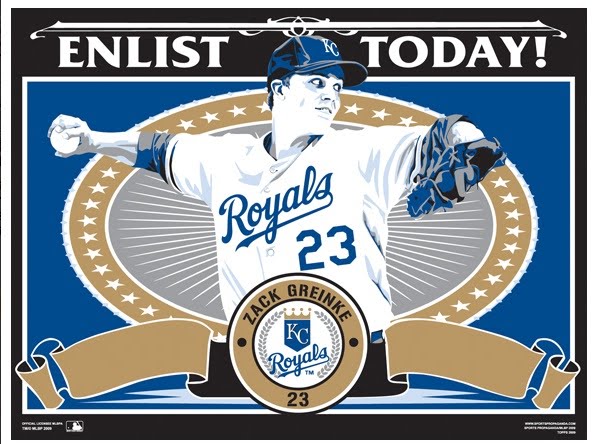
The NFL also regularly acts as propaganda for the military. Militant advocacy is ubiquitous during games- frequent advertisements for US military, appearances of troops at games, segments of troops overseas during holiday games. The Super Bowl begins with the national anthem and then encouraging words from the president, followed by fighter jets flying above. Furthermore, the parallels between the two are unmistakable. Athletes, like soldiers, become numbered gladiators that sacrifice their health and identity to follow orders from a commander. They are submitted to a caste system; and exploited to never see the kind of money they’re actually generating. Their bodies become conditioned for violence to gain territory on the opposition. Even terms used in football come directly from military use: Blitz, line to gain, bomb, trench, and encroachment.


As a non-sports fan, I’ve always found the reaction from fans intriguing, or mind-boggling. It’s interesting that seemingly sound-minded people can fall in love with athletes from across America that play for the team they live in, while developing this irrational hatred for similar men that play for opposing teams. Reminiscent of flag-waving war supporters without a clue what we’re fighting for, much?


The sociology of sports reflects everything that is wrong with America. Sports naturalize extreme violence for the sake of winning, is run by commercialism, uses the subservience of athletes to back corporate wishes, and strips the individual of their voice to stay popular with the keepers of normality. Corporations use their power to hide this fascist agenda and mislead fans into believing there’s no political notion in sports. We have been manipulated into accepting irrational behavior, finding ourselves act the same as those who are heavily biased in politics or blind nationalism. Sports have become a diversion to the issues that matter, a distraction that pits our own human nature against ourselves.


on 5/05/2011 3 comments Email This BlogThis! Share to X Share to Facebook
Labels: advertising, capitalism, politics, propaganda, race gender and media, sports
Bookmark this post:
StumpleUpon DiggIt! Del.icio.us Blinklist Yahoo Furl Technorati Simpy Spurl Reddit Google Twitter FaceBook

Yay For Gay


What do you get when you have two working people bringing home a salary with no child to spend it on? A marketer’s wet dream. According to San Francisco research, 76% of the gay and lesbian community earns more than the national average of $40,000 a year. This is largely because there is no child in the picture so both parties can afford to work. Marketer’s refer to it as DINK (dual income no kids) and are tickled to death by this jackpot. But what do you do when you have a mass of money to appeal to and the rest of your market is still up their bigoted ass? Use innuendo like your life depended on it.


For some reason, advertising to gays has this stigma that misled people to believing it must be sleazy or overly sexual to be effective. As though the only way to get homosexual attention is through sex. But isn’t that already a maxim for advertising in general anyway? Sex sells…to everyone. For decades the sexy attempts to sell to straight men has produced sweeping outrage from women for the shocking indecency and deprecation. When advertisers find themselves in this new light of moral awareness, they use a tactic like product placement. Homo-placement discreetly places symbols or other gay suggestions in the ad that blow over most hetero-heads. However, these ads that target gays don’t frequent your average CNN or ABC. They implement the classic American device known as “separate but equal.” Advertisers will run one gay commercial on Logo or Bravo and another, basically identical without homosexual implications, to the rest of America.


I’m not totally certain how I feel about these strategies to incorporate gay characters in mainstream commercials. On one hand, the fact these companies are using utmost discretion sends a message that being gay is something to hide. However, subtle placement could also be seen as attempts to normalize the homosexual community to the rest of society. While there’s always room for scrutiny, these ads could be baby steps toward tolerance (the non-offensive ads, anyway), a way to include homosexuals in ads without alienating them. Perhaps eventually pave the way to overall social equality. After all, there’s no better way to reach the top than through capitalism!


While it’s true that marginalized groups in history have acquired power through economic resources, it’s always been through producing or controlling money. However, gays and lesbians are breaching equality in the economic realm as the role of the consumer. It is because they’re so attractive to advertisers that they are offered the some kind of route to equality. Unfortunately, this commodization of homosexuality resulted in ads that hide gay culture with innuendos behind a straight appearance. Misrepresentation like this is ignoring millions of homosexuals who don’t experience reality like this, thus rendering their lives invisible once again.
on 5/05/2011 0 comments Email This BlogThis! Share to X Share to Facebook
Labels: advertising, homosexuality in media, race gender and media
Bookmark this post:
StumpleUpon DiggIt! Del.icio.us Blinklist Yahoo Furl Technorati Simpy Spurl Reddit Google Twitter FaceBook

Apr 4, 2011

Groupon-gate

Relatively new, inconspicuous companies have an important goal when introduced to the market- to notably position your brand and get your company known. Advertisers and PR reps stretch their morality thin concocting ads and publicity that will be memorable, infamously or not. Queue the cliché, “Any press is good press.”

Groupon is a company that was essentially invisible before they kicked down the doors of decency during the Superbowl XLV. Their parody to the suffering of Tibet was supposedly used to poke fun at their business, one that survives off trivial spending. Millions of viewers didn’t see the juxtaposition in such a comedic light and Groupon was castigated for their poor taste, eventually pulling all of the ads.

Their PR team had to have warned them of risky and unattractive consequences. There are questions and concerns that should have been addressed before airing.

- How many people have an emotional investment with Tibet and other grass-root organizations

- Is our advocacy for these organizations evident in the ads

- What kind of an image will we assume

- Will this be easy to fix

- Is it worth it?

Cleaning up this mess looked like a field trip to hell. Seemingly, media attention was more important for Groupon than brand image. Although, in 2011, all media is global media and marketing strategies must be designed to acknowledge that. I think the backlash was more than Groupon expected, because their crisis management wasn’t too solid. There were many routes that could have been taken yet their response didn’t seem thought out. The letter from Andrew Mason, Groupon’s CEO, assured that any damage done wasn’t intended and his angle for the ad was to be funny. He went on to point the blame at the ad agency, Crispin Porter & Bogusky, for their tendency to add controversy to their creativity. His words were defensive and poorly executed and Mason was criticized for it. Instead of implying “you’re just too stupid to get the humor,” he should have carried a more sympathetic tone. It’s important to understand the differences between values and ethics of other people, especially when you’re attempting to sell to a huge audience of key publics.

Now Groupon is better known and their business seems steady, at least in America. On the other hand, Groupon’s image isn’t exactly favorable by the masses just yet. Whether it’s the interesting approach to humor or indifference for sensitivity, the company was careless with it’s first major ad campaign. The role of PR in a campaign is especially crucial during the Superbowl; what people are saying the next day is what really matters. Either the PR reps were ignored or they were slacking.

on 4/04/2011 0 comments Email This BlogThis! Share to X Share to Facebook
Labels: advertising, crisis PR, jour4470, PR
Bookmark this post:
StumpleUpon DiggIt! Del.icio.us Blinklist Yahoo Furl Technorati Simpy Spurl Reddit Google Twitter FaceBook

Sep 17, 2010

We've Made a Fetish out of our 'Stuff'


So I read this book....and I want to talk about it. It's called The Code of Advertising: Fetishism and the Political Economy of Meaning in the Consumer Society, by Sut Jhally. It covers the basics of Marxism, and its relations to products, and the labor force.

Jhally makes it apparent we don't know about our products. Questions concerning the production, distribution, exchange, and consumption of any goods today are frivolous in our climate of advanced capitalism. Who's hands touched this? What were the working conditions like? How much did he/she get paid for it? Was it a child? We are alienated from these worthy questions.
Indifference to the inherent foundation of our goods has led to a mind-blowing phenomenon called commodity fetishism. “Commodity fetishism is seen when an excessive proportion of individual activities are channeled through the market so that the commercialized sector of our lives is unduly large.”

I’ve never had to think twice about the concept of “surplus-value” or profit. Jhally explains there is an exchange of equals in the workforce, worker’s labor for worker’s wage. Although, with this basis, how is profit possible? The shocking, yet not so shocking, fact that workers are producing more value with their labor than their own labor is worth, has bled into the political economics of broadcast media.

Cable networks sell audience-viewing time to advertisers for more money than I can sit comfortably with. The cliffhanger rests in how much are we, as an audience, worth? Networks fill the empty time they own by buying the watching power of the audience, or the capacity to watch. Advertisers buy our watching power (consciousness) from networks for more than what was originally paid, thus valorizing (establish and maintain the price of a commodity by governmental action) our consciousness. We're actually working when we watch TV.

We are paying the networks through our own consciousness. That's irritating. Think you get out of it with new technology like TiVo and Fios? Nope. The cyclical motion of us working in a non-media environment to pay for those commodities validates us right back where we started. Our money, our time, and our mind is handed over to broadcasting networks whether we like it or not.

So why? Why do we even watch TV? Studies show it's addictive, that we don't even really like it, that we feel guilty when we admit just how much we actually watch. Interesting...

Now, I’ve never been convinced of anything extremely negative about the realm of advertising. Although, it only took the first few points of The Code of Advertising to significantly make me question my sense of security.

Jhally’s impressively unbiased view of his observations initially made me assume he was a critique of advertisement. His illustration of Marxism unveiled worker suffrage that seemingly has no signs of improvement. We’re under the mercy of advertisement. His comeback to the defense of advertisement was that it doesn’t offer a reality that isn’t there; rather it reflects aspects of our social life that can be taken interpretively. This isn’t an outlandish concept, although it’s not exactly....soothing. Perhaps it is not advertising I should scapegoat, instead, the industry is merely trying to survive in the world of capitalism. Ultimately, my scope has been broadly widened.


on 9/17/2010 23 comments Email This BlogThis! Share to X Share to Facebook
Labels: advertising, consumerism, knowledge, marxism, objectification, politics
Bookmark this post:
StumpleUpon DiggIt! Del.icio.us Blinklist Yahoo Furl Technorati Simpy Spurl Reddit Google Twitter FaceBook

Older Posts Home

Labels

advertising (4) agenda setting (2) america (1) black media (2) C. Wright Mills (1) capitalism (1) carnival cruise (1) celebrity (1) cognitive bias (1) communism (1) conspiracy (1) consumerism (1) crime coverage (1) crisis PR (3) descartes (1) education (4) egypt (1) electronic (1) ethics (1) feuds (1) framing (3) future (2) gender roles (3) homosexuality in media (1) ignorance (4) image (6) jour4470 (2) journalism (5) journalism ethics (3) kanye west (1) knowledge (3) lara logan (1) marxism (1) masculinity (1) media (2) media bias (1) media ethics (2) media inequality (2) media racism (1) music (1) newsworthy (2) objectification (4) personal (2) persuasion (3) politics (4) PR (13) propaganda (2) race gap (2) race gender and media (9) racism (1) rap/hip-hop (1) reality TV (1) relationships (1) saul williams (1) sensationalism (1) sexism (2) social media (1) sports (1) stereotypes (3) stupid people in the headlines (1) teachers (2) technology (2) untj4470 (1)

Blog Archive

  • Mar (1)
  • Feb (2)
  • Jul (1)
  • May (3)
  • Apr (1)
  • Mar (3)
  • Feb (3)
  • Jan (2)
  • Dec (2)
  • Nov (3)
  • Oct (3)
  • Sep (2)

Followers

Powered by Blogger.

-Brittany Stone-

My photo
Brittany Stone
Recent graduate from the Mayborn School of Journalism of the University of North Texas. New to the Big Apple, getting my feet wet in the world of music PR, makin' change bartending. I'm an old soul that finds myself ruminating and brooding over life questions and revelations, --so this is my attempt to satisfy that, while chatting about PR, music, the evolving world of media/journalism and the unfortunate racism/sexism that still persists... ah! and politics aren't off the table. Don't worry, I play nice. L'chaim!
View my complete profile

Disqus for The Scuttlebutt

 
Copyright (c) 2010 The Scuttlebutt. Designed for Video Games
Download Christmas photos, Public Liability Insurance, Premium Themes